
Resistor or regulated? 12 V WS2811 pixels
Resistor or Regulated?
The right 12V WS2811 LED pixel solution for your project
Find suitable 12V pixelsVoltage Reduction: Two Methods Compared
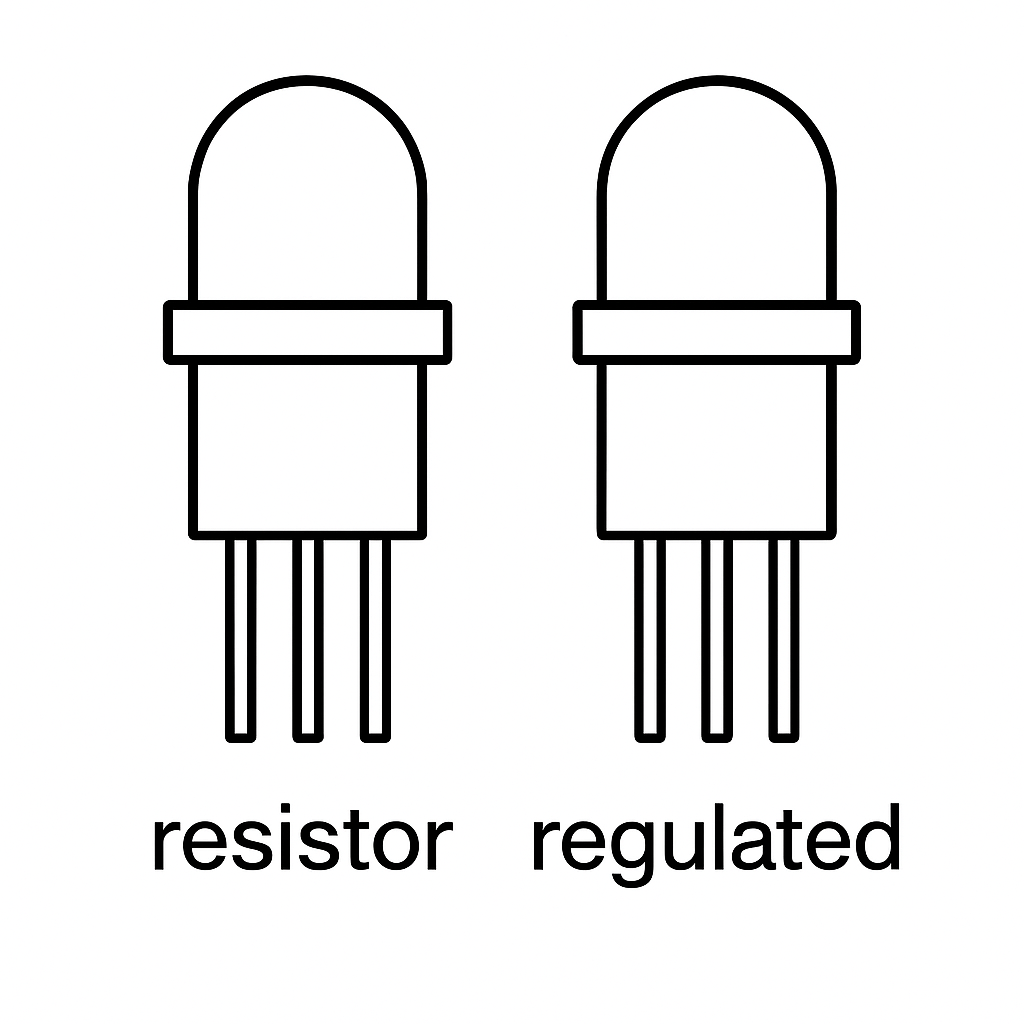
Option 1: Resistors ("resistor")
This simple method uses built-in resistors to reduce voltage. Advantage: low price. Disadvantage: longer chains cause voltage drop – pixels appear dimmer or color-shifted.
Option 2: Voltage Regulators ("regulated")
A linear voltage regulator ensures a constant 5V – even from e.g. 9V input. Brightness and color remain stable. If voltage drops below approx. 7–8V, pixels stop working.
Direct Comparison
| Property | Resistor | Regulated |
|---|---|---|
| Technology | Resistor voltage drop | 5V via regulator |
| Brightness | Decreases with length | Stable |
| Max length | ~5–6 m | ~10–12 m |
| Price | Cheaper | More expensive |
| Fault tolerance | Robust | More sensitive |
Recommendations
Frequently Asked Questions (FAQ)
What happens if the voltage is too low?
Resistor: LEDs dim. Regulated: LEDs turn off completely.
Can I connect regulated pixels incorrectly?
Yes, swapping lines (+ ↔ GND) may damage them.
Which option is cheaper?
Resistor pixels are cheaper and more robust – perfect for basic setups.
In stock

- SKU:
- 10235
- Variations in:
-
- Pixel Count
- Connection type
- Cable color
In stock

- SKU:
- 10237
- Variations in:
-
- Pixel Count
- Connection type
- Cable color
In stock

- SKU:
- 10239
- Variations in:
-
- Pixel Count
- Connection type
- Cable color
- Shipping weight:
- 0,01 kg
- Item weight:
- 0,01 kg